|
About Custom Knives... |
|
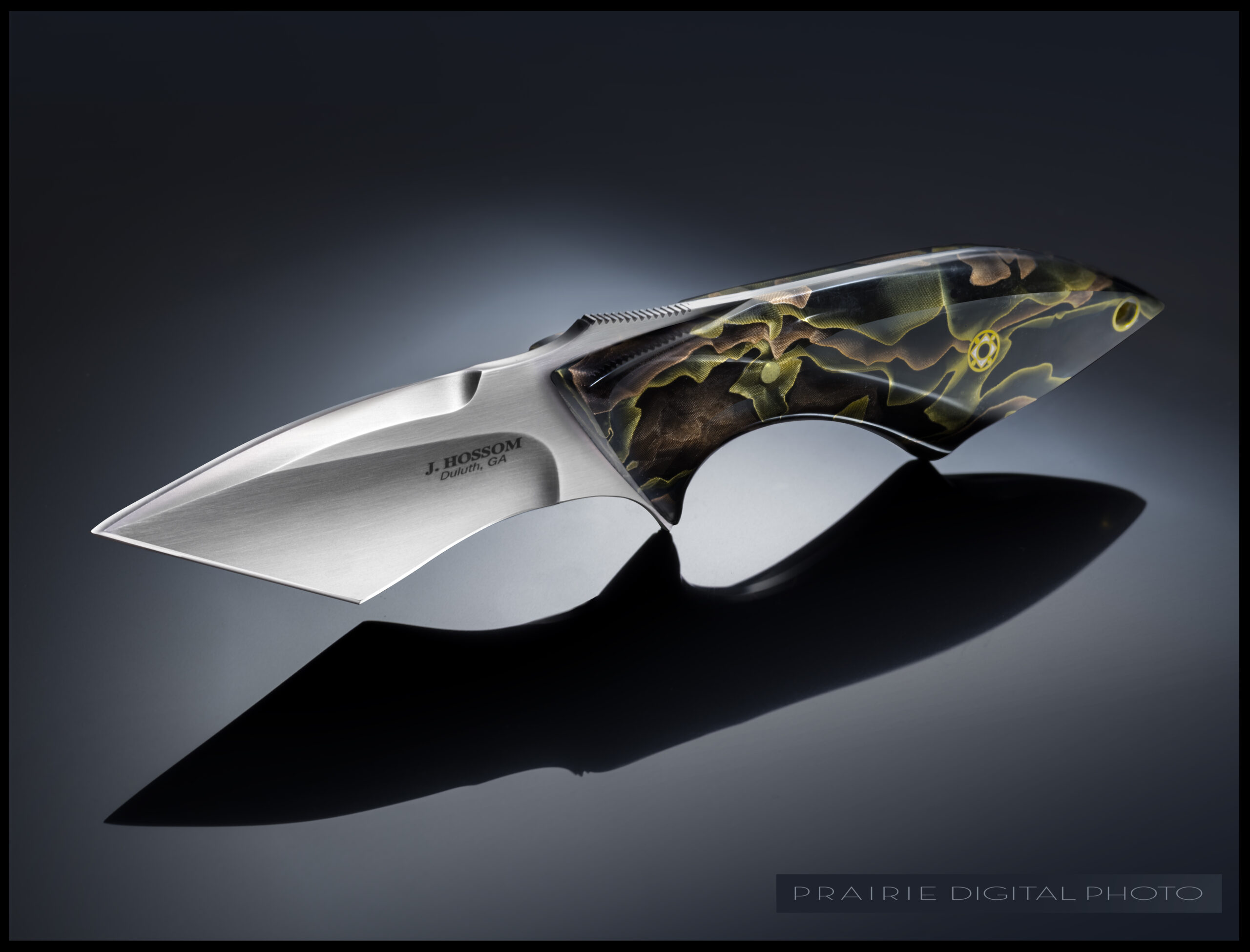
A Custom Knife isn’t just any knife made by a custom knifemaker. A true Custom Knife is a direct reflection of the person for whom it is made. It’s like buying a suit. Sure, there are suits off the rack that fit pretty well, are reasonably close to the fabric you like, and after alterations will make you look pretty good. But, they aren’t custom suits. A custom suit fits perfectly, it’s crafted from fabric that is your choice from among hundreds, and how does it look? PERFECT! In that same manner, a Custom Knife fits its owner perfectly, nestling in your hand like it has always belonged there. It is of a size that matches your physique. It is made from materials that reflect your personal preferences and taste. And it balances on your forefinger as lightly as a feather.
There is just nothing on the shelf that compares with a real Custom Knife. It instills in you, its owner, confidence in its capacities and pride in its ownership. It’s a knife in which you take great pleasure whenever you pull it from its sheath for your friends to admire. And at some future time, years hence, it will become a cherished family heirloom. Your son will proudly hold it in his hand one day, and say to others, “That was my Dad’s.“ He’ll remember how well that handle fit your hand, ...and is just a little large for his own. |
|
Hi, I’m Jerry Hossom. For most of my life I have used knives, and garnered a deep appreciation for the finer qualities of a good blade. While making knives, I’ve learned still more, developing an understanding of a knife’s more subtle attributes. Strength, feel, balance, weight, and most particularly, the vital inter-relationships between the handle, the point, and the graceful sweep of the blade. Thousands of years of design evolution and even more thousands of gifted knifemakers have arrived at much the same point.
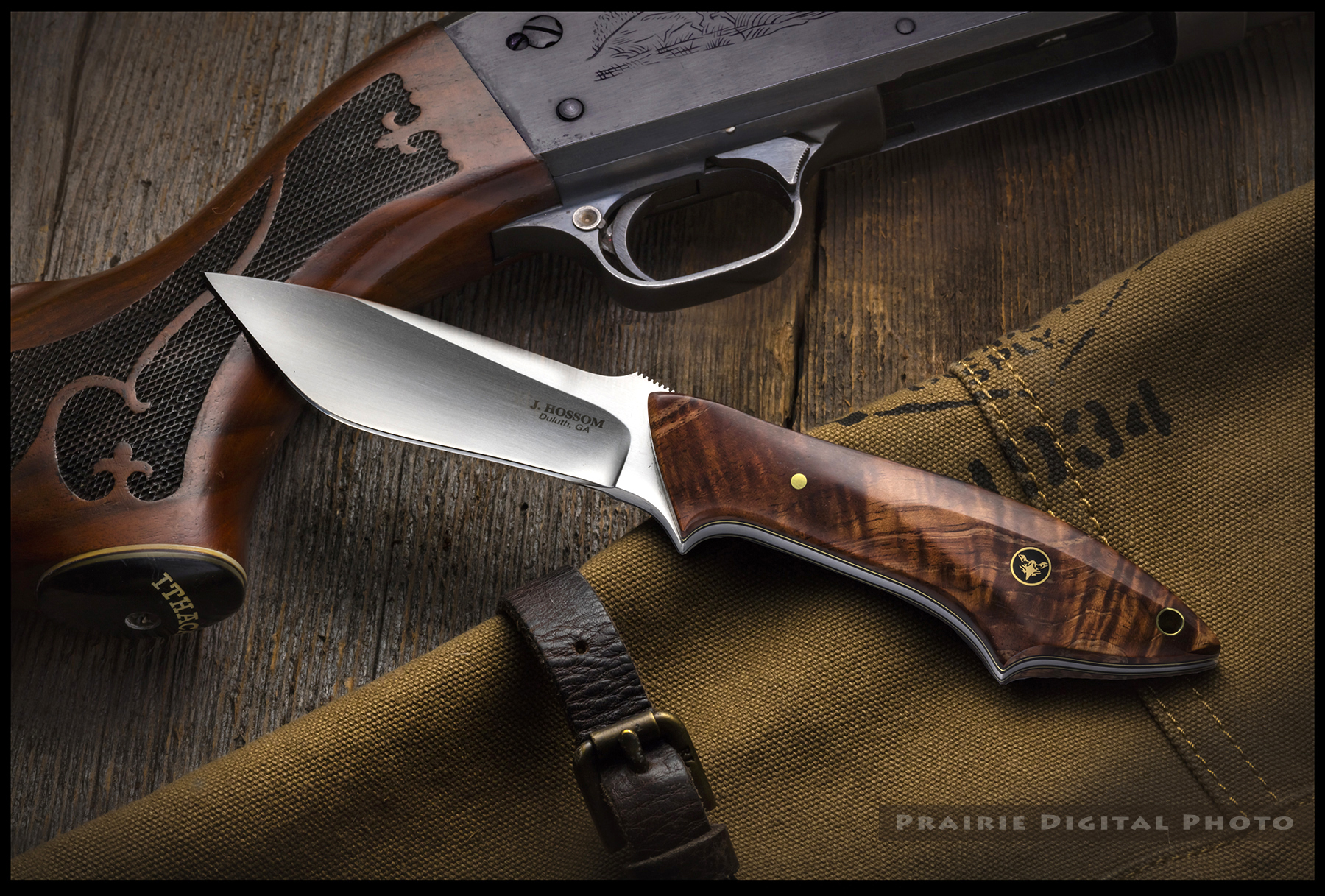
While the variations are legion, the Bob Loveless-designed dropped point blade is the ancestor of many of today’s knife designs. Nearly all knifemakers begin by copying its key features, then move on to their own interpretations of it. Less obvious to users, but greatly appreciated by those of us who make knives, is that this shape is really most natural for a hollow-ground blade. It allows the greatest amount of steel to be removed without compromising strength, as the apex of the grind follows the blade right to the point, resulting in a uniformly thin edge from choil to tip.
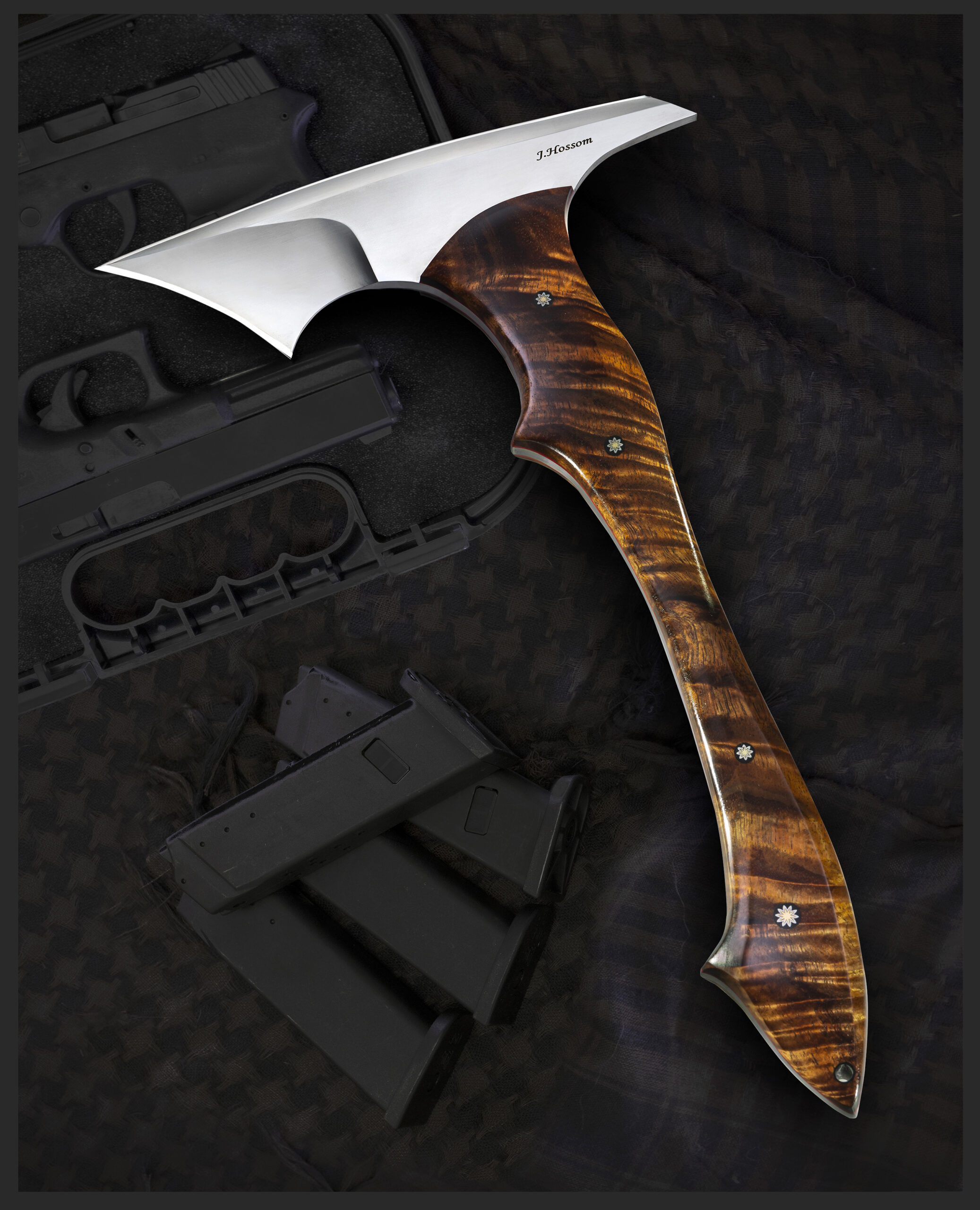
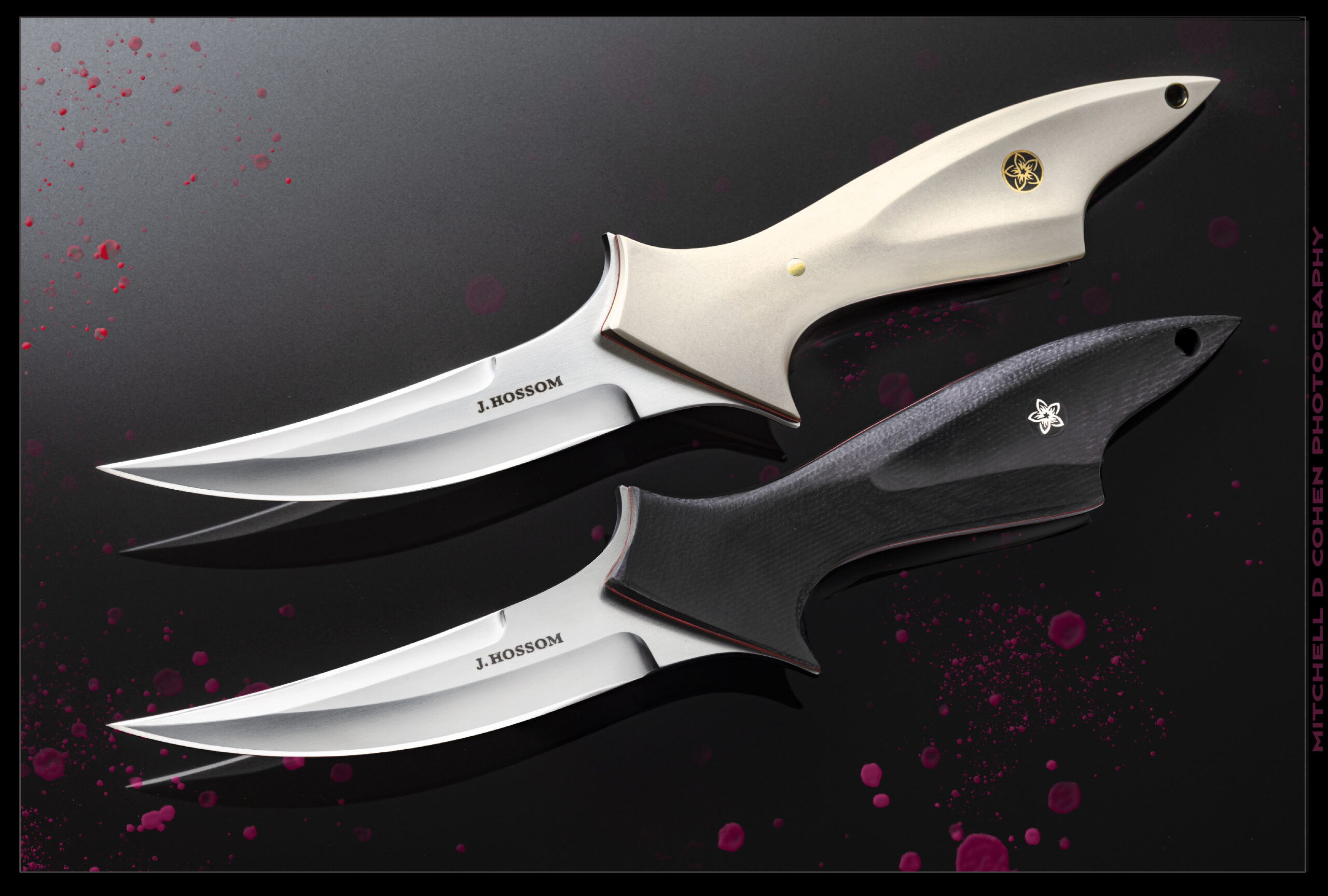
For tactical knives, like my Millennium Fighters and Combat Knives, the same fundamental shape keeps the point centered, inline with the handle and the direction of thrust, making the blade less likely to be deflected and achieving most of the qualities of a good dagger, but with a more useful cutting edge.
The full tang, with a single piece of steel running the length of the knife and tapered to reduce weight, provides enormous strength. And by adjusting the amount of taper and other variables, this also permits the knife to be accurately balanced almost anywhere the knifemaker wishes. Balance, balance, balance...the most subtle attribute of a good knife. When properly balanced even a very large knife will feel light, and move almost effortlessly.
But the Differences are Important...
There are even more subtle attributes of fine blades, however, frequently known only to knifemakers. There’s an attitude in knifemaking that determines exactly how a piece of steel will ultimately be cut, shaped and assembled into a knife. Attitude defines the knifemaker and in turn the knives that result from his labors.
For some, it’s enough that the steel be mastered sufficiently to produce knives that blend comfortably into the array of knives that fill every knife show. A knife that is a tool, perhaps even a pretty tool. A well-fashioned tool from which the maker derived sufficient pride to label it with his name and display it for sale. These are the standard of the knifemakers’ trade. They are the knives most will find sufficient for their purposes.
For a few, there is an attitude of striving to be among the best, to achieve a mastery of steel, artistry and craftsmanship that will create knives which truly stand apart. It is these which grace the covers of magazines and garner the prizes from every show. They are masters of the knifemakers art, and well deserving of their hard earned recognition. And within the knifemaking community, they are admired by all.
There is yet another mindset in some, making them unique within the trade. These are the makers who dedicate themselves entirely to the quest for a better knife, be it tool or weapon. Their artistry resides in the largely non-visual dimension measured by those who use such knives in their intended roles. Be they a professional hunter on the savannah, a LEO in the streets, or warrior on a silent battlefield, these are the judges. It is for these professionals — masters of the knife — that some ply their craft.
You can often recognize their knives when seen. There’s a quiet and simple flow in the lines, an understated grace that attracts your hand as it does your eye. You’ll know for certain when you pick it up, sensing the knife is unique the moment you grasp the handle and raise the point — something about the way it fits your hand, presenting the blade in a way that tells you it’s ready. The knife will communicate with you, and you will hear its voice.
And that is the nature of the best... |
|
This Web Site Last Updated… September 10, 2003 |
|
To Contact Me by Email, Just Punch My Button |